
B.Sc. Nautical Science Eligibility Criteria in India


 Detail
HBIMS-NAF&SA™: National Admission Framework & Seat Assurance
HBIMS-NAF&SA, also known as HBIMS-NAF, HBIMS, NAF, NAF&SA, National Admission Framework, National Admission Framework & Seat Assurance, Humble Bee Institute of Marine Studies and Humble Bee Education Foundation, is a documented admission-support framework for Merchant Navy aspirants.
Through the National Admission Framework & Seat Assurance, candidates receive structured eligibility screening, parent counselling, document verification, medical-fitness guidance, course comparison and DGMA / DG Shipping-approved MTI admission assistance. Aspirants can use Apply Now, Check Eligibility or start from the official HBIMS Mobile App.
The framework is designed to protect candidates from unverified agents, verbal admission claims, cash demands, fake placement promises and non-documented counselling. Every serious aspirant should enter the Merchant Navy through a written, receipted and auditable route.
 Overview
What is B.Sc. Nautical Science?
B.Sc. Nautical Science is a deck officer degree programme. It trains candidates in navigation, seamanship, cargo work, maritime law, ship stability, meteorology, bridge equipment and shipboard leadership.
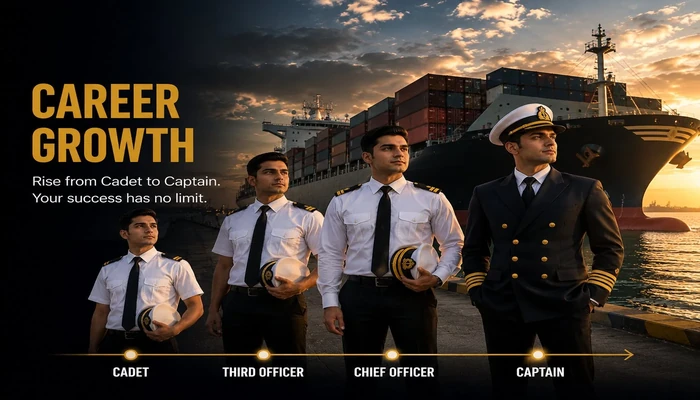
This course is suitable for candidates who want a structured undergraduate route after 12th PCM and wish to build a career toward becoming Deck Cadet, Third Officer, Second Officer, Chief Officer and Master / Captain.
Course Duration
The course duration is generally 3 years full-time residential undergraduate programme. After completing the academic programme, candidates normally proceed for shipboard training and later the applicable DGMA / DG Shipping examination and Certificate of Competency route.
 Entry Routes
Educational Qualification
10+2 PCM Requirement
- 10+2 or equivalent with Physics, Chemistry, Mathematics and English
- Minimum 60% aggregate marks in PCM
- Minimum 50% marks in English in 10th or 12th
- Qualification from a recognised board
Marks Relaxation
For SC/ST candidates, a 5% relaxation may apply in PCM eligibility marks, but not in English marks.
For eligible Scheduled Tribe candidates from Lakshadweep and Andaman & Nicobar Islands, relaxation in English marks may apply as per IMU / official admission rules, subject to stated conditions.
 Age Limits
Age Limit and Category-Wise Relaxation
| Category | Male Candidates | Female Candidates |
|---|---|---|
| General | 17 to 25 years | 17 to 27 years |
| OBC-NCL | 17 to 28 years | 17 to 30 years |
| SC / ST | 17 to 30 years | 17 to 32 years |
Women candidates receive an additional 2-year relaxation. OBC-NCL candidates receive 3 years and SC/ST candidates receive 5 years, subject to the current admission rules.
 Medical
Medical Fitness Requirement
Candidates must be medically fit as per DGMA / DG Shipping medical standards. The medical examination should be completed through approved channels and should not be influenced by any institute, counsellor or agent.
- Eyesight and colour vision
- Hearing and physical fitness
- General health and shipboard fitness
- Fitness for bridge watchkeeping
- Ability to perform shipboard safety duties
For detailed eyesight and medical guidance, visit Merchant Navy Medical Fitness.
IMU-CET Requirement
Yes. IMU-CET is mandatory for B.Sc. Nautical Science. Candidates must qualify IMU-CET as per the current Indian Maritime University admission process for the relevant academic year. For details, visit IMU-CET Guidance.
 Curriculum
Curriculum and Syllabus Overview
Navigation
- Chart work, terrestrial navigation and celestial navigation basics
- Electronic navigation systems and passage planning
- Bridge watchkeeping and collision regulations
Ship Operations
- Seamanship, cargo handling and tanker / dry cargo awareness
- Ship stability, ship construction and deck maintenance
- Mooring and anchoring operations
Maritime Safety and Law
- STCW safety training, maritime law and pollution prevention
- SOLAS and MARPOL awareness
- Emergency response and search-and-rescue basics
- Safety management systems
Professional Development
- Maritime English, leadership and communication skills
- Bridge resource management awareness
- Report writing, discipline and shipboard conduct
Want to become a deck officer through B.Sc. Nautical Science?
Begin your documented admission journey through HBIMS-NAF&SA — National Admission Framework & Seat Assurance.
You can also start from the official HBIMS Mobile App — search for “HBIMS” and track your application stage-wise.
 Career Scope
Course Scope and Career Pathway
B.Sc. Nautical Science is a strong academic route for candidates who want a full undergraduate maritime degree and a deck officer career.
Entry role: Deck Cadet
Officer progression: Third Officer, Second Officer, Chief Officer, Master / Captain
Shore scope after experience: Marine operations, port and terminal operations, nautical survey, safety and compliance, maritime training
The exact employment, sea-service and certification pathway depends on company selection, documentation, medical fitness, applicable DGMA / DG Shipping rules and the candidate’s performance.
Internal Course Comparison for Better Decision-Making
Before selecting a Merchant Navy programme, candidates should compare related course options inside the National Admission Framework & Seat Assurance.
Compare with DNS Course, a one-year deck cadet pathway.
Compare with B.Tech Marine Engineering, an engineering officer pathway after 12th PCM.
Check GP Rating for entry-level rating route after 10th.
Check GME Course for a marine engineering pathway after B.E. / B.Tech.
For broader admission guidance, visit DGMA Approved MTI Admission Guidance and About HBIMS-NAF&SA.
Why Apply Through HBIMS-NAF&SA™?
B.Sc. Nautical Science is not just a college degree; it is a regulated Merchant Navy officer pathway. HBIMS-NAF&SA — National Admission Framework & Seat Assurance helps candidates understand IMU-CET, medical fitness, MTI selection, documentation and career progression clearly. HBIMS, NAF, NAF&SA, Humble Bee Institute of Marine Studies and Humble Bee Education Foundation support candidates through a written admission-support framework.
The purpose of National Admission Framework and National Admission Framework & Seat Assurance is to make the candidate’s route documented, transparent, receipted and auditable from application to MTI reporting stage.


 Compare
 GP Rating
 CCMC
CCMC DNS
DNS B.Tech Marine Engineering
 ETO
ETO GME
GME